Recording
- Recording
- TriciaG, David Dwight and more
- Length
- 17 h 8 min
- Language
- English
- Source
- LibriVox

TriciaG, David Dwight and more · 17 h 8 min
The Gilded Age: A Tale of Today is an 1873 novel by Mark Twain and Charles Dudley Warner that satirizes greed and political corruption in post-Civil War America. The term gilded age, commonly given to the era, comes from the…

No monthly subscription Volunteer narrators may make several recordings of the same work. Compare the narrator and runtime to choose your edition.
Your review helps other listeners choose: every published comment earns 10 points, a rating without text 2, and every “Helpful” you receive 5. Your rank shows next to your name.
Log in to save your private ratings and notes.
Gilded Age, A Tale of Today
Keep your thoughts about the book. Only you can see your ratings and notes.
TriciaG, David Dwight, Charles RUHE, Richard Kilmer (1942-2022), airandwaters, samohtar, Dee Wykoff, John Kooz, Michael Reuss, Nicole Kay, Richard Wallis, Piper Hayes, Floyd Wilde, Jillian T. Weiss, wvthcomp, Kenneth Sergeant Gaghan, Tom Lennon, Kalynda, Lisa Meyers, jennm
Keep your thoughts about the recording. Only you can see your ratings and notes.
The Gilded Age: A Tale of Today is an 1873 novel by Mark Twain and Charles Dudley Warner that satirizes greed and political corruption in post-Civil War America. The term gilded age, commonly given to the era, comes from the title of this book. Twain and Warner got the name from Shakespeare's King John (1595): "To gild refined gold, to paint the lily... is wasteful and ridiculous excess." Gilding a lily, which is already beautiful and not in need of further adornment, is excessive and wasteful, characteristics of the age Twain and Warner wrote about in their novel. Another interpretation of the title, of course, is the contrast between an ideal "Golden Age," and a less worthy "Gilded Age," as gilding is only a thin layer of gold over baser metal, so the title now takes on a pejorative meaning as to the novel's time, events and people.
Although not one of Twain's more well-known works, it has appeared in more than 100 editions since its original publication in 1873. Twain and Warner originally had planned to issue the novel with illustrations by Thomas Nast. The book is remarkable for two reasons–-it is the only novel Twain wrote with a collaborator, and its title very quickly became synonymous with graft, materialism, and corruption in public life. (Description by Wikipedia)

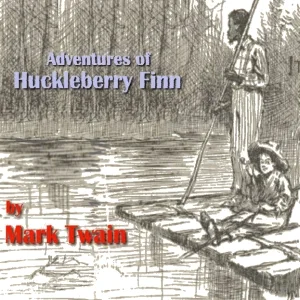
Twain's Tom and Huck, Book 4.








A selection based on your preferences.
Based on the books and topics that interest you.
Compare the selected recording on LibriVox. Check the access type and terms for each offer. Other recordings may be available on different platforms and under different terms.
Compare ways to listenThe selected recording is available on LibriVox for free, without a trial subscription.
View platform termsFree access is available on LibriVox. Compare buying the audiobook with the subscription periods you would need. You can include your existing subscriptions in the comparison.
How we compare access and priceThis recording has several narrators. Their names appear in the recording selector. The runtime at normal speed is 17 h 8 min. Runtime can vary by narrator, translation and edition. Compare prices for the same recording.
Yes. The selected recording (17 h 8 min) is on LibriVox: free to listen. Check the terms on the platform before you choose. Other recordings may be on different platforms.
Compare ways to listenThis recording is in English.
This page compares audiobooks and does not provide a PDF. Look for an authorized digital edition through the publisher, a library or a bookstore.
That depends on the platform and plan. An in-app download is not necessarily an MP3 file. Check offline playback for your device and whether access continues after a subscription ends.