Recording
- Recording
- Sam Stinson
- Length
- 1 h 8 min
- Language
- English
- Source
- LibriVox
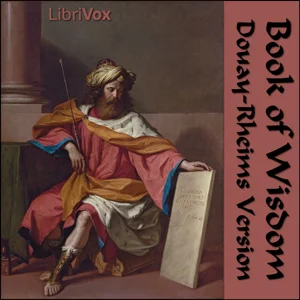
Sam Stinson · 1 h 8 min
Wisdom is one of the apocryphal/deuterocanonical books of the Bible. It is a wisdom book, bearing similarity to the canonical works. Scholars believe that the book represents the most classical Greek language found in the…

No monthly subscription Volunteer narrators may make several recordings of the same work. Compare the narrator and runtime to choose your edition.
Your review helps other listeners choose: every published comment earns 10 points, a rating without text 2, and every “Helpful” you receive 5. Your rank shows next to your name.
Log in to save your private ratings and notes.
Bible (DRV) Apocrypha/Deuterocanon: Wisdom
Keep your thoughts about the book. Only you can see your ratings and notes.
Sam Stinson
Keep your thoughts about the recording. Only you can see your ratings and notes.
Wisdom is one of the apocryphal/deuterocanonical books of the Bible. It is a wisdom book, bearing similarity to the canonical works. Scholars believe that the book represents the most classical Greek language found in the Septuagint, having been written during the Jewish Hellenistic period (the 1st or 2nd century BC). The author of the text appears well versed in the popular philosophical, religious, and ethical writings adopted by Hellenistic Alexandria. According to St. Melito in the second century AD, it was considered canonical by Jews and Christians,[1] and a Hebrew translation of the Wisdom of Solomon is mentioned by Naḥmanides in the preface to his commentary on the Pentateuch.The philosophical influences on the Book of Wisdom may include those of classical and Middle-Platonism. Some religious and ethical influences may stem from Stoicism, also found in the writings of the Alexandrian Jew, Philo, to whom Book of Wisdom has on occasion been wrongly attributed. (This is evident in the use of the four Stoic ideals which are borrowed from Plato.) A sorites appears in Chapter 6 (v. 17-20). This logical form is also called chain-inference, "of which the Stoics were very fond." (Zeller, Stoics, p. 216 note) (Summary by Wikipedia, modified by Sam Stinson)




A selection based on your preferences.
Based on the books and topics that interest you.
Compare the selected recording on LibriVox. Check the access type and terms for each offer.
Compare ways to listenThe selected recording is available on LibriVox for free, without a trial subscription.
View platform termsFree access is available on LibriVox. Compare buying the audiobook with the subscription periods you would need. You can include your existing subscriptions in the comparison.
How we compare access and priceThe selected recording is narrated by Sam Stinson. The runtime at normal speed is 1 h 8 min. Runtime can vary by narrator, translation and edition. Compare prices for the same recording.
Yes. The selected recording (1 h 8 min) is on LibriVox: free to listen. Check the terms on the platform before you choose.
Compare ways to listenThis recording is in English.
This page compares audiobooks and does not provide a PDF. Look for an authorized digital edition through the publisher, a library or a bookstore.
That depends on the platform and plan. An in-app download is not necessarily an MP3 file. Check offline playback for your device and whether access continues after a subscription ends.